

Pedagogical Concept
Pedagogical Concept
In our kindergarten, children have the right to understanding, safety, and the freedom to develop their full potential. This gives rise to responsibilities for both educators and parents. Only through working together can educational work be successful, and this pedagogical concept forms an important foundation for that cooperation.
Image of the Child
From birth, the child is an active participant in shaping their own development and personality. Through independent action, children learn about the world in a playful way and acquire knowledge. The child is at the center of our work. Our task is to create an atmosphere of trust in which each child can be supported, challenged, and encouraged in the best possible way. We build on each child’s individual abilities and provide a variety of activities and opportunities that foster their development. We recognize and take into account the different stages of development of every child and support each child individually according to their needs.
Role of the Educators
Our educational approach is democratic. This means that we interact with children as partners and take them seriously as independent individuals. We respond to the specific needs of different age groups and create appropriate conditions and opportunities for learning and experience.
It is important to us that rules and agreements, which have largely been developed together with the children and accepted as binding, are respected and followed.
We place great emphasis on positive feedback and recognition. We strive to be reliable and trustworthy caregivers for the children and to support them whenever necessary.
Our focus is on helping children become independent and self-confident individuals. We do this by giving them the opportunity to choose their own playmates and by encouraging them to resolve conflicts and problems on their own. We offer our assistance and provide guidance and encouragement whenever needed in different situations.
Educational Areas
Play is our preferred method of learning and development. Educators, the learning environment, and various activities provide children with opportunities to express their creativity and to explore themselves and the world around them through play, free from performance pressure or expectations.
Health
In keeping with the motto, “There is no such thing as bad weather, only inappropriate clothing,” we try to spend time outdoors every day.
We place great importance on a varied and healthy diet. Breakfast and afternoon snacks are freshly prepared each day at the kindergarten, partly using organic products. Lunch is provided by a catering service.
We brush our teeth together every day, thereby promoting an early awareness of dental health. Our kindergarten is certified as a “Kita mit Biss” (“Kindergarten with Bite”) and implements a preventive program aimed at maintaining healthy children’s teeth.
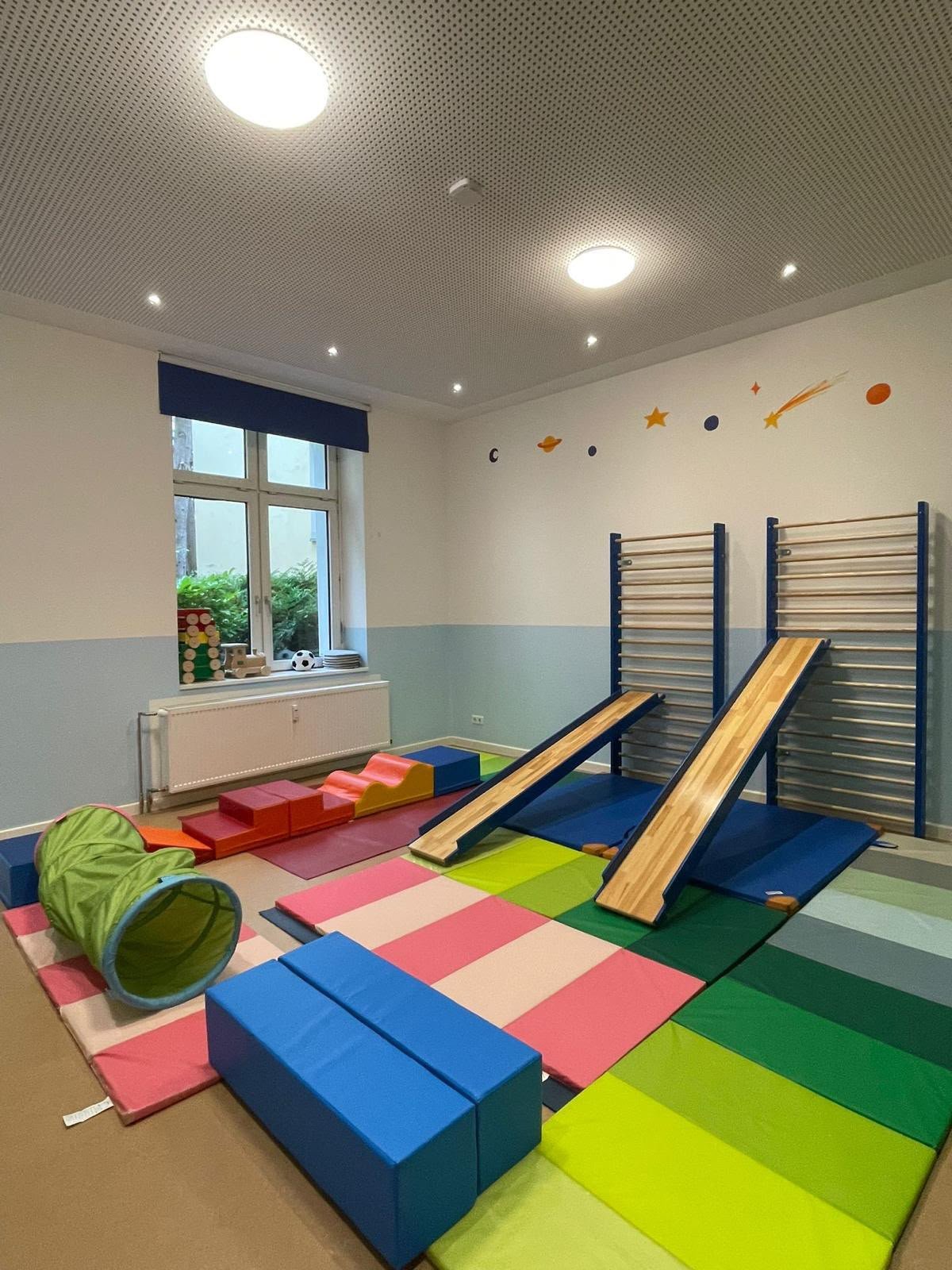
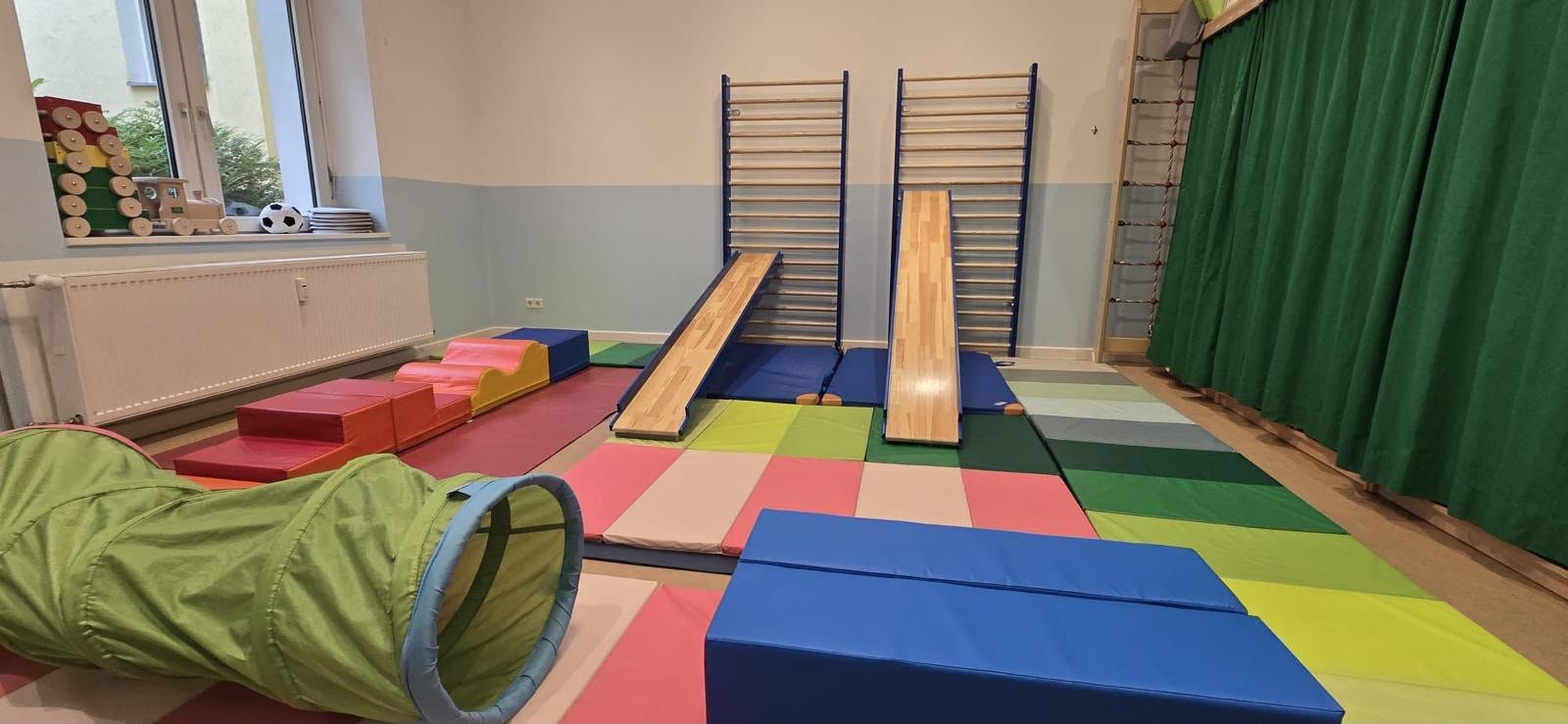
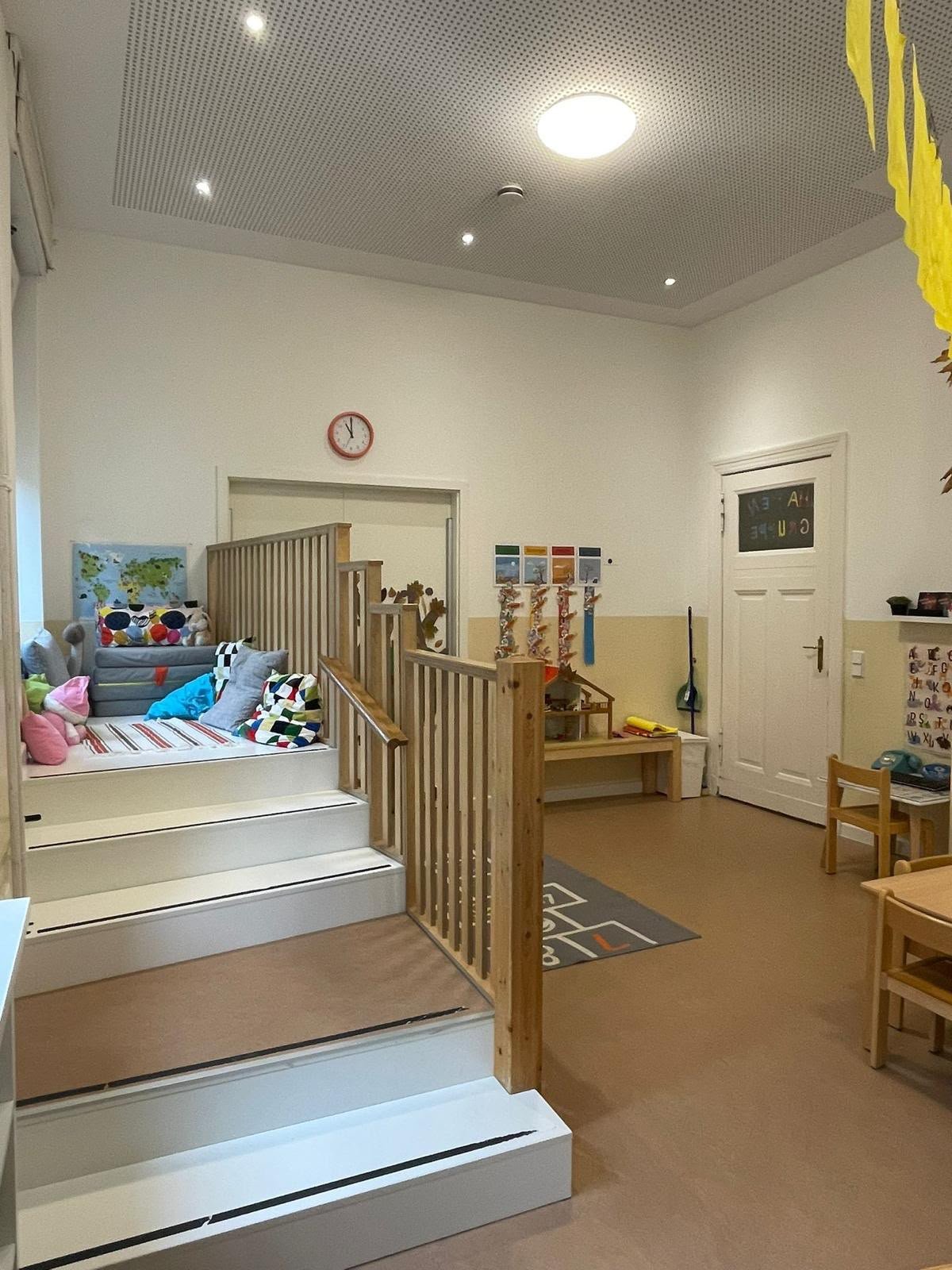
Since physical activity is a fundamental prerequisite for holistic learning processes, we create a wide range of opportunities for movement in everyday life. In our movement room, as well as outdoors in nature and on playgrounds, children gain important motor experiences, strengthen their body awareness, and experience the joy of being physically active.
Social and Cultural Life
We discuss rules for interacting with one another, take responsibility for the well-being of others, promote empathy and a willingness to reach agreements, and intervene when we encounter injustice. We also demonstrate ways of cooperating and encourage children to play together.
We encourage our children to approach one another openly and without prejudice, to form friendships, and to express their emotions. We provide an open atmosphere in which children feel comfortable expressing their feelings and support them in learning how to cope with and understand those emotions.
Throughout the year, we celebrate various festivals and special occasions, such as Carnival, Easter, Children’s Day, the Summer Festival, the School Cone Celebration (Zuckertütenfest), the Autumn Festival, the Lantern Festival, St. Nicholas Day, and Christmas. Together with the children, we explore these special occasions through themed activities and turn them into unforgettable experiences. With music, small theatrical performances, creative activities, and a special shared breakfast, each celebration becomes a highlight of our kindergarten life. Community, joy, tradition, and meaningful shared experiences are at the heart of these events. Children are encouraged to actively participate, contribute their own ideas, and experience the celebrations with all their senses.
Excursions are also an integral part of our educational work. We regularly visit places such as the library, cinema, theatre, museums, and local parks with the children. In this way, we broaden their horizons, stimulate their curiosity, and enable them to participate in cultural life from an early age.
Communication
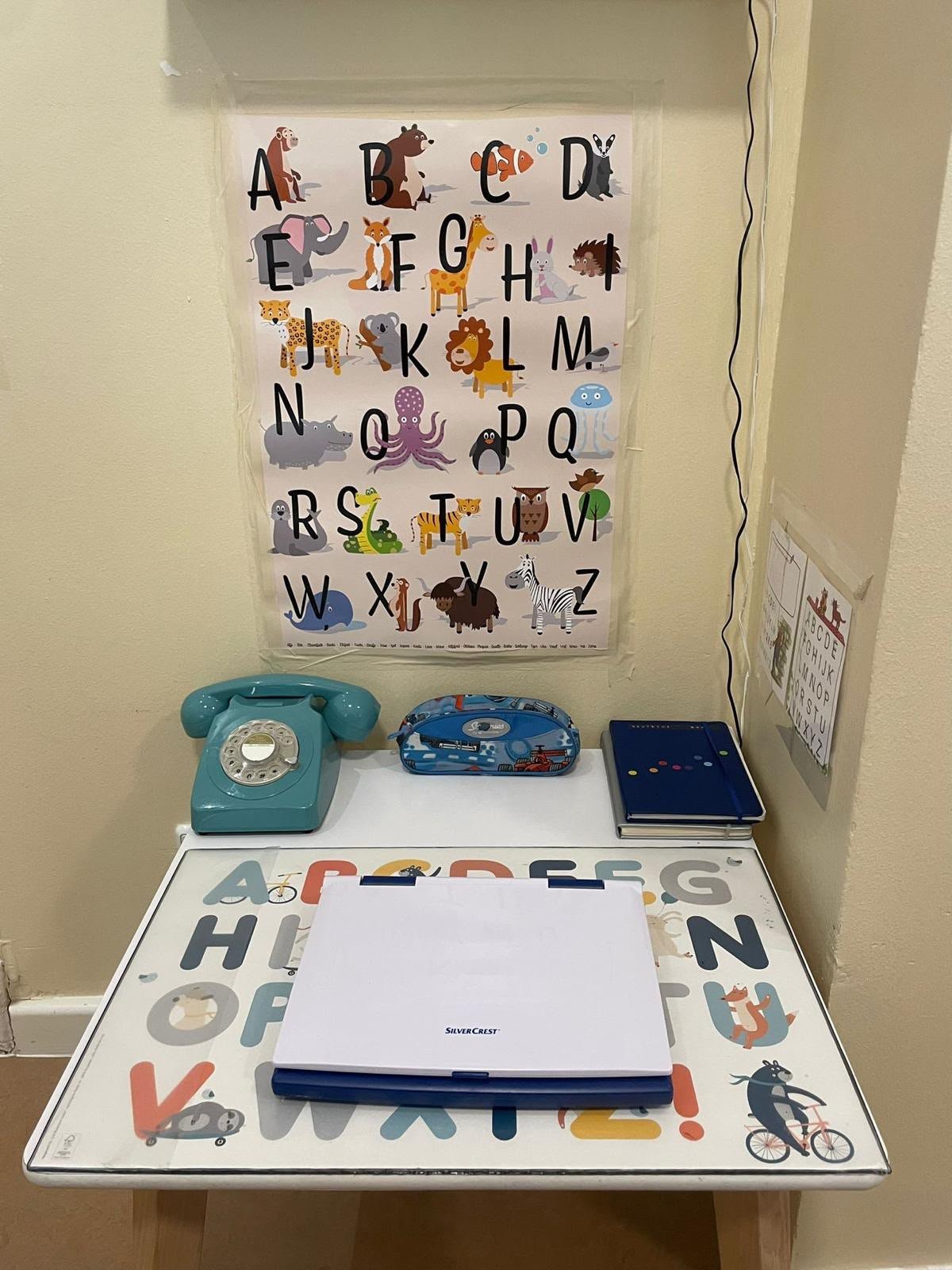
Language is woven into every aspect of daily life at our kindergarten. We naturally provide verbal commentary on everyday activities as well as picture books. Songs, rhymes, finger plays, and lap games are an integral part of our daily routine.
Children are regarded as equal conversation partners. We take the time to engage in dialogue with them and show interest in their activities. Through active listening, we encourage them to continue expressing themselves and sharing their thoughts. We ask questions that invite meaningful responses and support the development of their language and communication skills.
Art: Visual Arts, Music, and Dramatic Play
Visual artistic activities promote keen observation, imagination, and creativity. Working with a wide variety of materials such as paints, water, paper, wire, paste, sand, wood, modeling clay, and many others encourages children to experiment and explore. We engage in crafting, designing, painting, and building, while learning different techniques for using various materials.
A wide range of art materials is freely accessible to children in the group rooms. Children learn from one another, become more self-confident, and inspire each other. Through these creative activities, they explore their senses, develop their creativity, and strengthen their fine motor skills.
Music
Music is an integral part of our daily kindergarten life and accompanies us every day—during morning circle time, project work, movement games, and in many other everyday situations. It supports children’s holistic development, strengthens social interaction, and enriches our daily routine in a variety of ways.
Once a week, a music educator visits our kindergarten. She introduces the children to different musical styles and combines music with singing, movement, dancing, and playful experimentation. Through making music together with Orff instruments, children discover rhythms and sounds, develop a sense of beat and tempo, and experience music with all their senses.
Dramatic Play
In our kindergarten, we create spaces where children can give free rein to their imagination. One special place for this is our Magic Room. Here, children have access to a variety of costumes, hand puppets, and adaptable curtains that can be used either as room dividers or as a classic stage curtain for a grand performance.
Through dramatic play, children learn to express their feelings, perform in front of a group, and work together to bring creative ideas to life. They take on different roles, reenact stories, or invent their own scenes. In doing so, they actively engage with the world around them and broaden their horizons through play.
Dramatic play supports language development, strengthens self-confidence, and enhances social skills. Children practice seeing situations from different perspectives, portraying conflicts, and developing solutions together through cooperative play.
Mathematics
Children begin to develop mathematical thinking from their very first years of life. They gain their first experiences with numbers, geometric shapes, quantities, weight, size, and time. Mathematics accompanies us throughout the entire day.
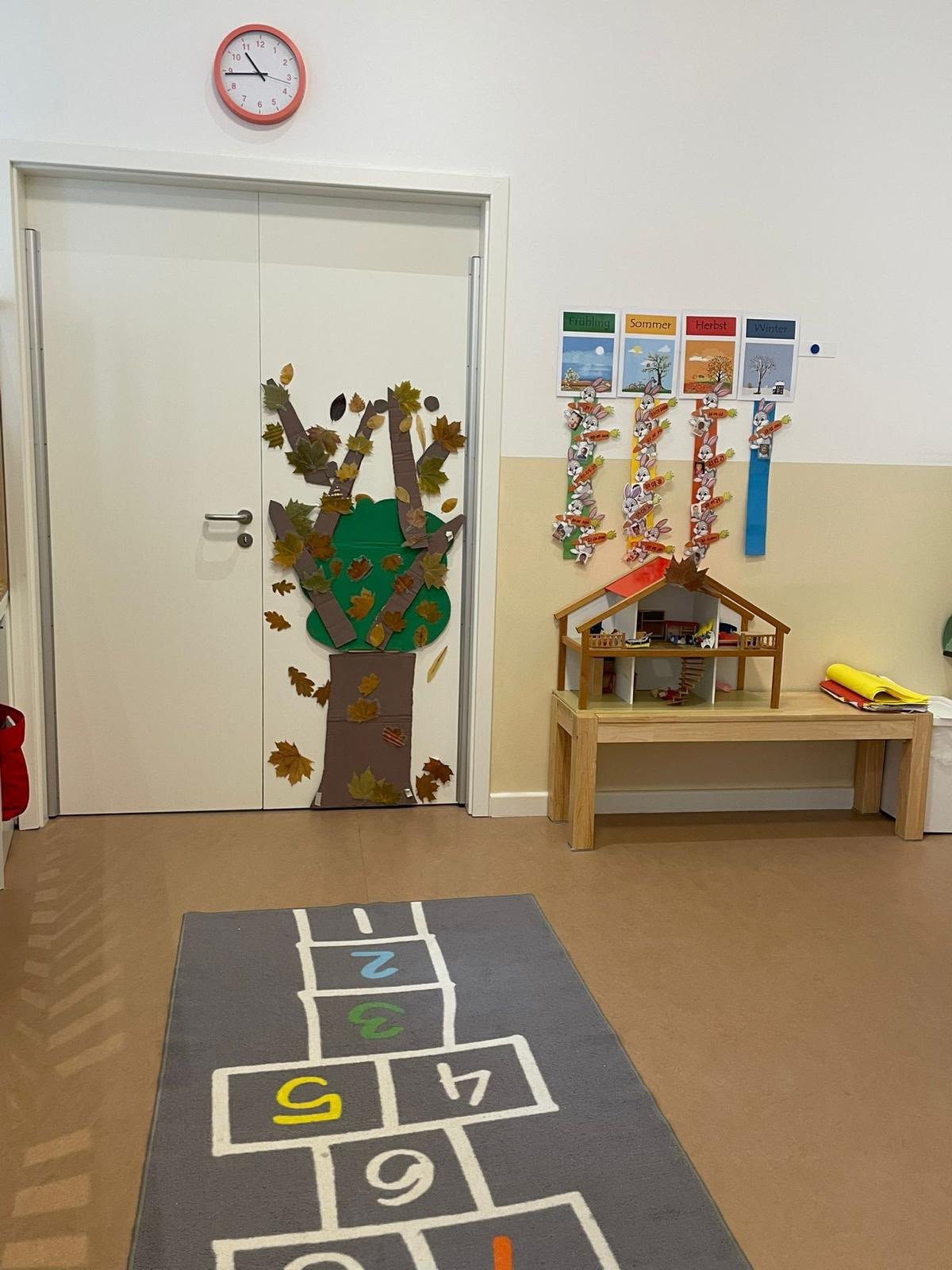
Through play, children learn to recognize patterns, structures, and order. They collect stones, sticks, and other natural objects and sort them according to size, weight, and shape. They try to figure out which shape fits into which opening. Number sequences are learned through movement: for example, How many steps are there from the group room to the bathroom?
Counting children, as well as distributing and sharing items such as toys or food, also contributes to the development of early mathematical skills.
Nature – Environment – Technology
Children are explorers. They continually discover and investigate the world around them. As part of their environment, they are eager to understand it more deeply. They want to know why things are the way they are, explore with all their senses, and thereby gain their first experiences in science and nature.
By experimenting with water, soil, and air, children learn about simple cause-and-effect relationships and develop a basic understanding of how the world works. For example, when we blow strongly on food, it cools down. When sand is mixed with water, it becomes wet, soft, and moldable.
During our walks, we observe and investigate stones, leaves, beetles, and spiders in their natural environments. In this way, children develop curiosity, make discoveries, and gain valuable experiences with nature, the environment, and basic scientific concepts.
Observation and Documentation
An important tool for observation and documentation is the Language Learning Diary (Sprachlerntagebuch). Upon entering the kindergarten, each child receives one of these books. It accompanies the child until they start school.
Children have access to their diaries at all times and can actively work on them. For example, they may bring photos from home and paste them into the diary (e.g., under the topic “This is where I live”). They also have the opportunity to draw pictures (e.g., on the topic “This is my family”).
In addition, we conduct educational interviews with the children. During these interviews, children have the opportunity to talk about themselves and their interests. All of these methods provide opportunities for children to speak and express themselves, while our task is to record their exact words.
Based on these records, we can clearly identify the areas of language development in which a child is already progressing well and where additional support may still be needed.
Managing Transitions: Settling into Kindergarten
To ensure that children have a successful start to their kindergarten experience, we follow the Berlin Settling-In Model(Berliner Eingewöhnungsmodell). This model generally provides for an adaptation period of approximately three weeks.
However, every child responds differently to a new and unfamiliar situation. Therefore, we want to give each child the time they need to become comfortable with the new environment, the other children, and their educators.
This means that each settling-in process is tailored individually to the child, and every step is discussed and coordinated with the parents.
Transition to School
At the end of their time in kindergarten, we aim to make the transition from kindergarten to school as smooth and positive as possible for both the children and, of course, their parents.
We provide parents with important information regarding school entry and all related topics. In addition, we strive to establish partnerships with nearby primary schools, which enables us to organize visits and become familiar with the school environment.
Once a week, preschool children participate in special age-appropriate activities designed to specifically support and strengthen the skills and competencies they need for a successful start at school.
Early Childhood Participation and Inclusion
We are committed to education and upbringing that are conscious of prejudice and actively oppose all forms of exclusion and discrimination. Learning about different cultures, countries, and religions is just as important to us as involving all children in decisions that affect everyday life in the kindergarten. Every child has a voice, and every voice deserves equal attention and respect.
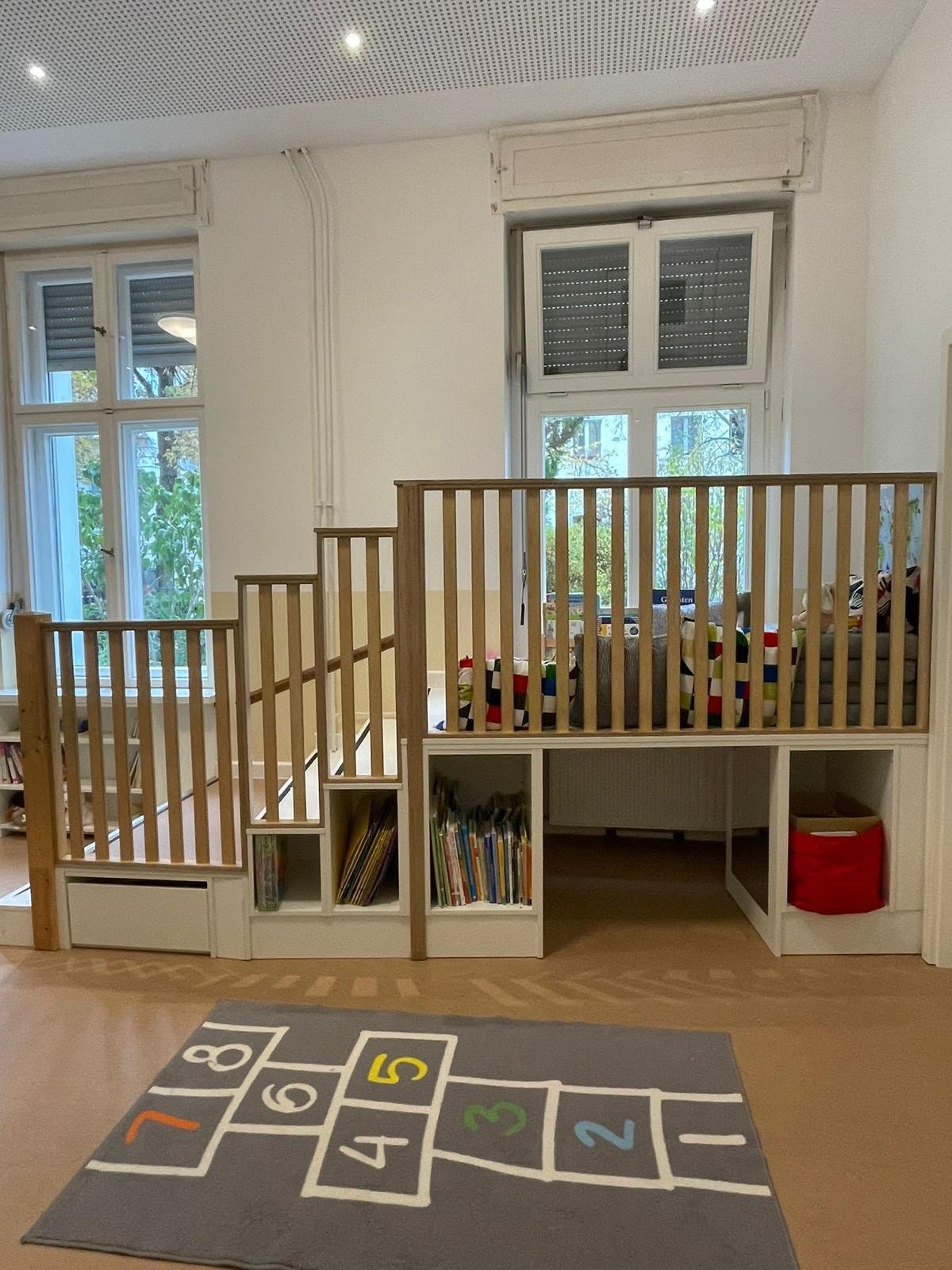
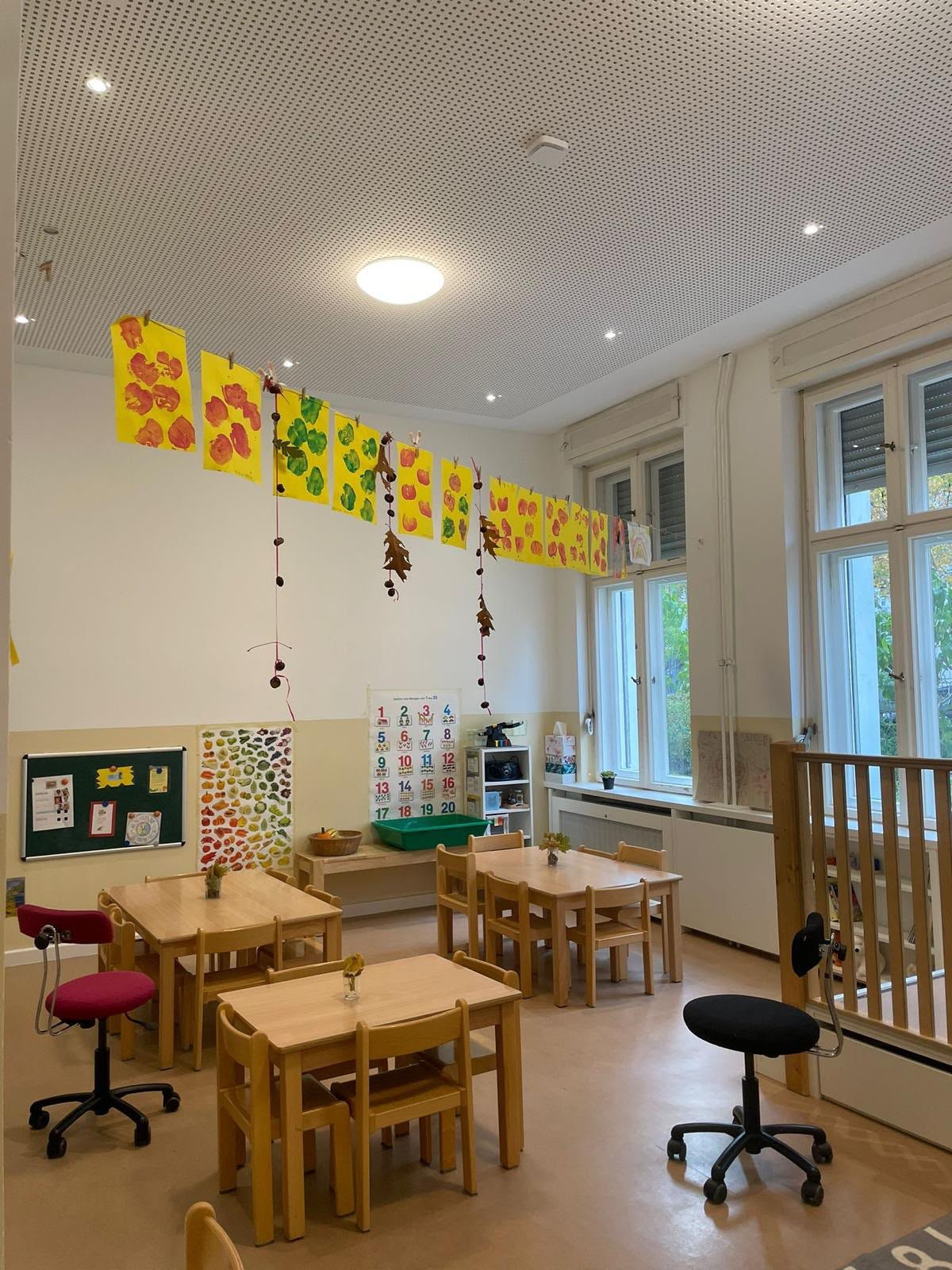
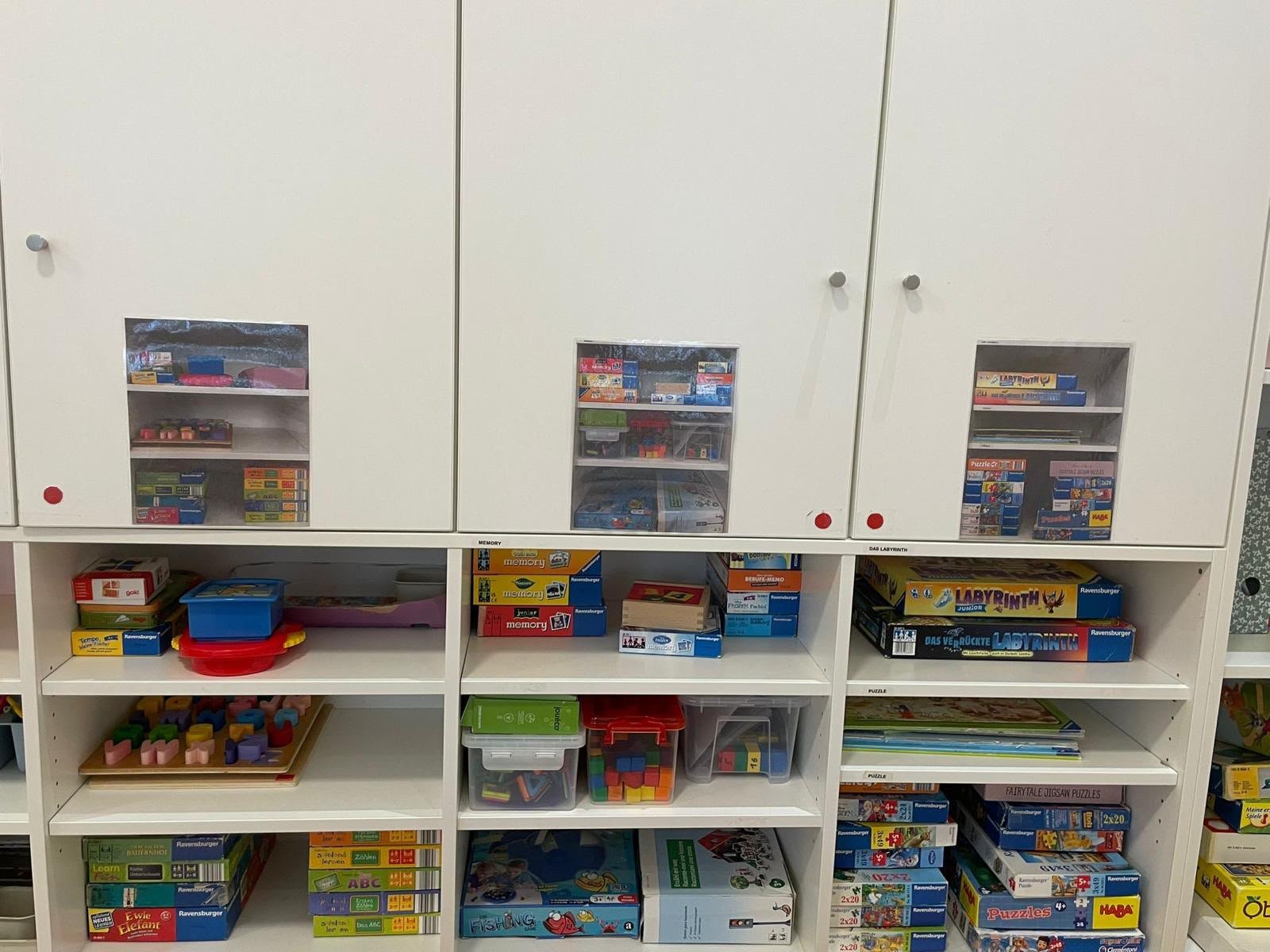
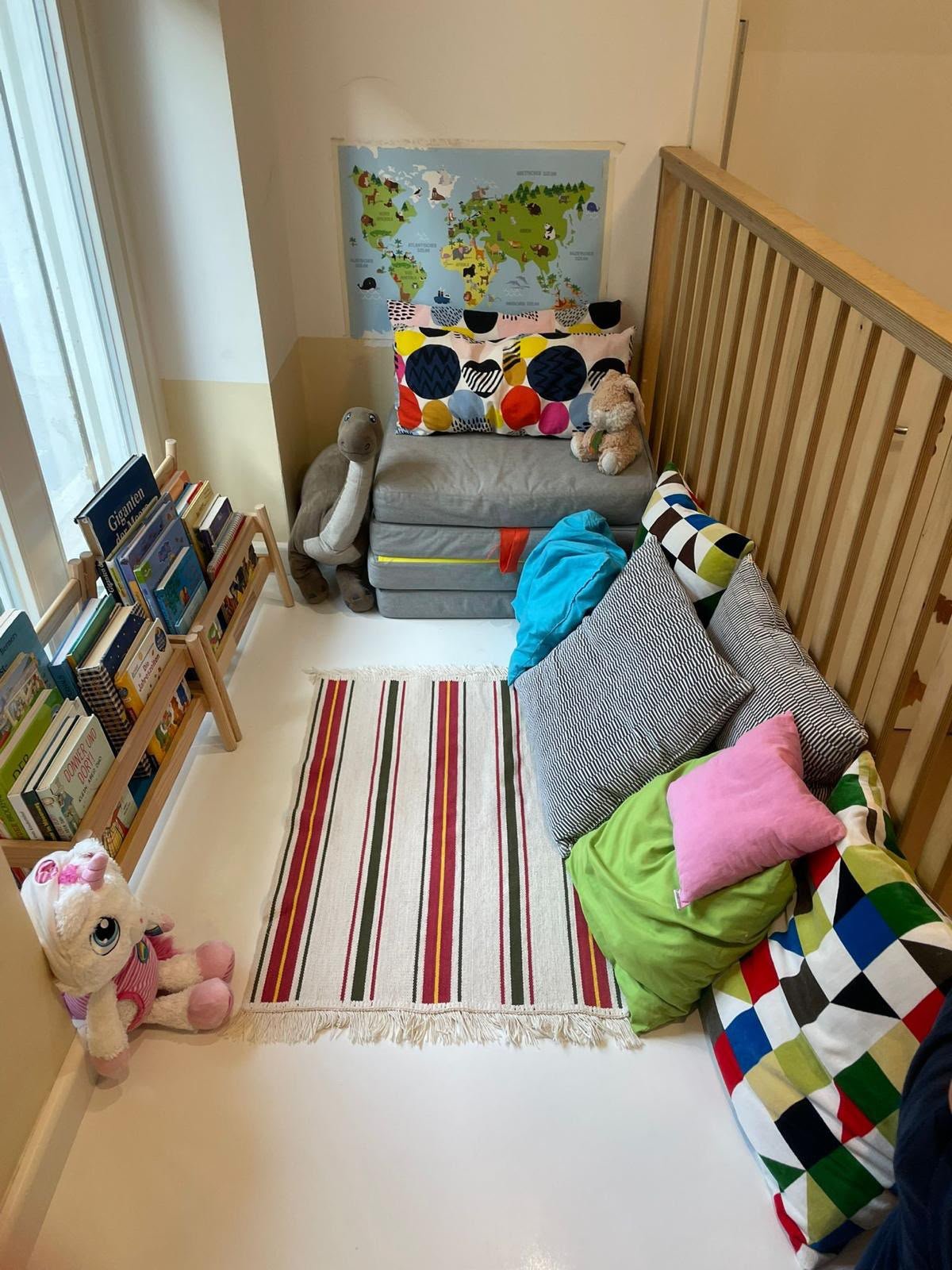
Our doors remain open for most of the day so that children can move freely throughout the kindergarten. Games and books are stored on open shelves and are freely accessible to the children. In addition, we encourage every child to do independently everything they are already capable of doing.
The morning circle is a particularly important setting for participation. It is a place where children can share their needs and feelings, and where the day is planned together and introduced through songs or games. It provides an ideal opportunity to discuss suggestions for shared activities and, for example, to vote on the next craft project, upcoming excursion, or playground to visit.
The morning circle also offers an opportunity to reflect together on our everyday culture and values: What rules apply during meals, rest time, tidying up, excursions, and play? What is fair and what is unfair? How do we treat one another? How do we take care of our toys and books?
Cooperation with Parents
As our institution is a particularly small kindergarten, cooperation with parents is naturally very close and intensive.
In order to provide children with the best possible support and opportunities for development, a trusting relationship and regular communication with parents are essential. A successful educational partnership can only be achieved when both children and parents feel equally comfortable and welcome within the kindergarten.
To establish this relationship, we arrange individual appointments with parents before a child is admitted to the kindergarten for an initial meeting. During this meeting, both parents and educators have the opportunity to get to know one another, exchange information about the child, and discuss expectations, wishes, and questions.
When parents collect their children, brief daily conversations take place in which we inform them about the events and experiences of the day. In addition, at least once a year—and more often if requested by either parents or educators—an individual development meeting is held with each family. During these meetings, the educational staff discuss the child’s development with the parents, exchange observations about current behaviors, and agree on ways to continue supporting the child’s growth and learning.
Information boards and displays of the children’s work in the cloakroom, hallways, and group rooms provide parents with insights into everyday life and educational activities within the kindergarten. We encourage parents to regularly take an interest in what is happening in the kindergarten and to learn about current projects and topics from both their children and the educators.
At the beginning of each kindergarten year, parent representatives are elected during the parent meetings, which take place twice a year. Alongside the educators, these representatives serve as contacts for all parents. Parents can approach them if they have concerns regarding the kindergarten or if they would like to contribute suggestions, ideas, or feedback.